

- ✦1. Niacinamide: For a More Even-Looking Complexion
- ✦2. Hyaluronic Acid: For Hydration and a Plumper Appearance
- ✦3. Panthenol: For Skin Comfort and Moisture Support
- ✦4. Niacinamide vs Hyaluronic Acid vs Panthenol: What's the Difference?
- ✦5. Can You Use Niacinamide, Hyaluronic Acid and Panthenol Together?
- ✦6. How to Build a Simple Routine Around These Ingredients
- ✦The VYMA Routine Fit
Walk into the world of skincare, and you will quickly encounter three names: niacinamide, hyaluronic acid, and panthenol.
They appear in serums, moisturisers, toners, and countless skincare recommendations. Each has a different role, yet it can be difficult to know which one deserves a place in your routine.
Should you choose niacinamide for uneven skin tone? Hyaluronic acid for hydration? Panthenol for comfort?
The good news is that these ingredients are not necessarily competitors. They can complement one another when formulated appropriately.
At VYMA Beauty, we believe that understanding skincare ingredients helps you make more confident choices without feeling overwhelmed by trends.
Here is what these three ingredients do, how they differ, and how to decide what your skin needs.
1. Niacinamide: For a More Even-Looking Complexion
Niacinamide is a form of vitamin B3 used in a wide range of skincare products.
It is popular because it offers several potential benefits without being an exfoliating acid. Depending on the formulation and concentration, niacinamide can help support the skin barrier, improve the appearance of uneven skin tone, and reduce the appearance of excess oil.
- ✦Helps improve the appearance of uneven skin tone: Niacinamide can help reduce the transfer of melanin-containing structures to skin cells, which may improve the appearance of certain dark spots and uneven pigmentation over time.
- ✦Supports the skin barrier: It helps support the skin's natural barrier function, which is important for maintaining moisture and keeping skin comfortable.
- ✦May help with the appearance of excess oil: Some formulations containing niacinamide may help reduce visible oiliness. Results depend on the individual and the overall product formulation.
Niacinamide may be a useful ingredient for people concerned about uneven-looking skin tone, visible pores, excess shine, or a weakened-feeling skin barrier. However, concentration matters less than finding a well-formulated product that your skin tolerates. Higher concentrations are not automatically better, and some people experience irritation. If you are new to niacinamide, start with a suitable formulation and introduce it gradually.
2. Hyaluronic Acid: For Hydration and a Plumper Appearance
Despite its name, hyaluronic acid is not an exfoliating acid.
It is a humectant, meaning it attracts and holds water. Hyaluronic acid occurs naturally in the body and is used in skincare to help increase the skin's hydration.
When skin is adequately hydrated, it may appear smoother, softer, and temporarily plumper.
- ✦Helps attract moisture: Hyaluronic acid binds water, helping improve the hydration of the skin's surface.
- ✦Supports a smoother-looking complexion: Well-hydrated skin can look more supple, and the appearance of fine lines associated with dryness may become less noticeable.
- ✦Works with other skincare ingredients: Hyaluronic acid can be used alongside niacinamide and panthenol in many formulations. These ingredients have different functions and can complement one another.
Hyaluronic acid can be useful for dry, dehydrated, oily, and combination skin because dehydration can affect any skin type. For best results, apply your product according to its instructions and follow with a suitable moisturiser to help reduce moisture loss. If your skin feels tight or uncomfortable after applying a hydrating product, reassess the entire routine, including your cleanser, moisturiser, and environment. One ingredient alone cannot resolve every cause of dryness.
3. Panthenol: For Skin Comfort and Moisture Support
Panthenol, also known as provitamin B5, is widely used in skincare because of its moisturising and skin-conditioning properties.
It can help attract moisture and support the skin barrier, making it a useful ingredient in products designed for skin that feels dry or uncomfortable.
- ✦Helps moisturise the skin: Panthenol supports hydration and can help leave the skin feeling softer.
- ✦Supports barrier function: A healthy skin barrier helps retain moisture and protects the skin from everyday environmental stressors. Panthenol can support this function as part of a suitable formulation.
- ✦Helps improve skin comfort: Panthenol is commonly included in products intended to condition the skin and reduce the feeling of dryness.
People experiencing dryness or tightness may appreciate products containing panthenol. It can also be useful in routines focused on maintaining skin comfort. If your skin is persistently inflamed, painful, or unusually sensitive, however, skincare ingredients should not replace appropriate medical advice.
4. Niacinamide vs Hyaluronic Acid vs Panthenol: What's the Difference?
Here is a simple comparison to help you understand how each ingredient works and what it is most useful for.
| Ingredient | Main Role | May Be Useful For |
|---|---|---|
| Niacinamide | Supports the skin barrier and improves the appearance of uneven tone | Uneven-looking complexion, visible oiliness, barrier care |
| Hyaluronic Acid | Attracts and retains water in multi-depth dermal layers | Dehydrated skin, dryness-related fine lines, plumpness |
| Panthenol (B5) | Moisturises, conditions, and calms the skin | Dryness, tightness, post-cleansing sensitivity, skin comfort |
These ingredients address different aspects of skincare. Niacinamide is often selected for tone and barrier support, hyaluronic acid for hydration, and panthenol for moisture and comfort. You do not necessarily have to choose just one.
5. Can You Use Niacinamide, Hyaluronic Acid and Panthenol Together?
In many cases, yes.
These ingredients are commonly combined in well-formulated skincare products because their functions complement one another.
Hyaluronic acid helps attract moisture, panthenol supports hydration and skin comfort, and niacinamide supports the skin barrier while helping improve the appearance of uneven skin tone.
A combination product can also make your routine simpler by reducing the number of separate products you need.
That said, compatibility depends on the complete formulation, not just the ingredient list. If your skin is sensitive, introduce new products gradually and patch-test first. You do not need to layer every popular ingredient to achieve healthy-looking skin.
6. How to Build a Simple Routine Around These Ingredients
A thoughtful skincare routine does not need to be complicated. Here is an easy framework designed around these three powerhouses.
- ✦Give your routine time.
- ✦Avoid introducing multiple new products at once.
- ✦Adjust your frequency if your skin becomes irritated.
Choose a cleanser that removes impurities without leaving your skin feeling stripped.
A product containing niacinamide and hydrating ingredients fits if you want to support hydration and a more even-looking complexion.
Choose a lightweight barrier moisturiser appropriate for your skin type.
Use broad-spectrum SPF 30 or higher and reapply as directed.
Remove sunscreen, makeup, and daily environmental impurities.
Apply your treatment serum and follow the product's directions on slightly damp skin.
Help maintain hydration and active ingredient nourishment overnight.
Meet VYMA Beauty Brightening Serum
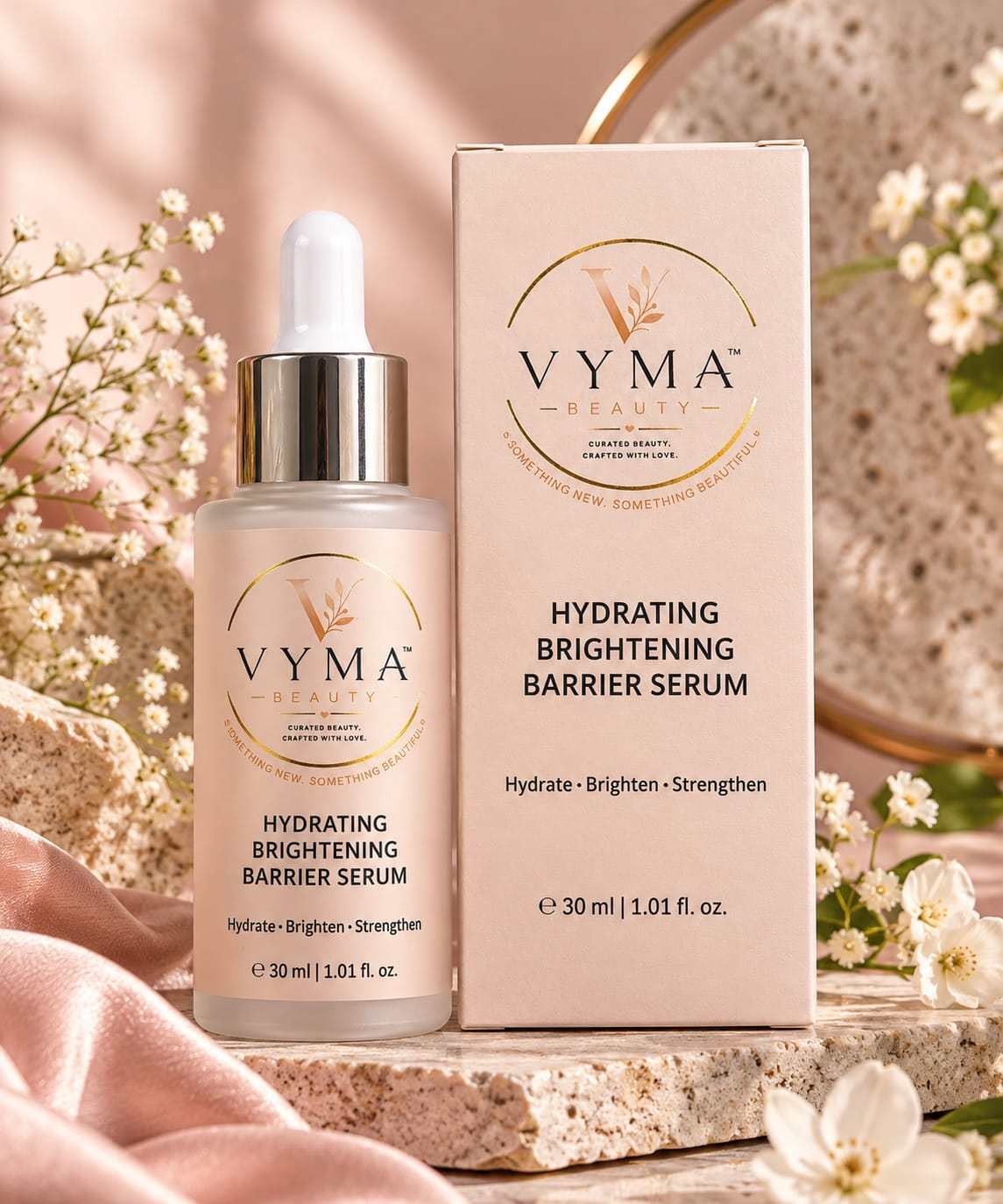
The All-in-One Synergy of Niacinamide, HA & Panthenol (30ml)
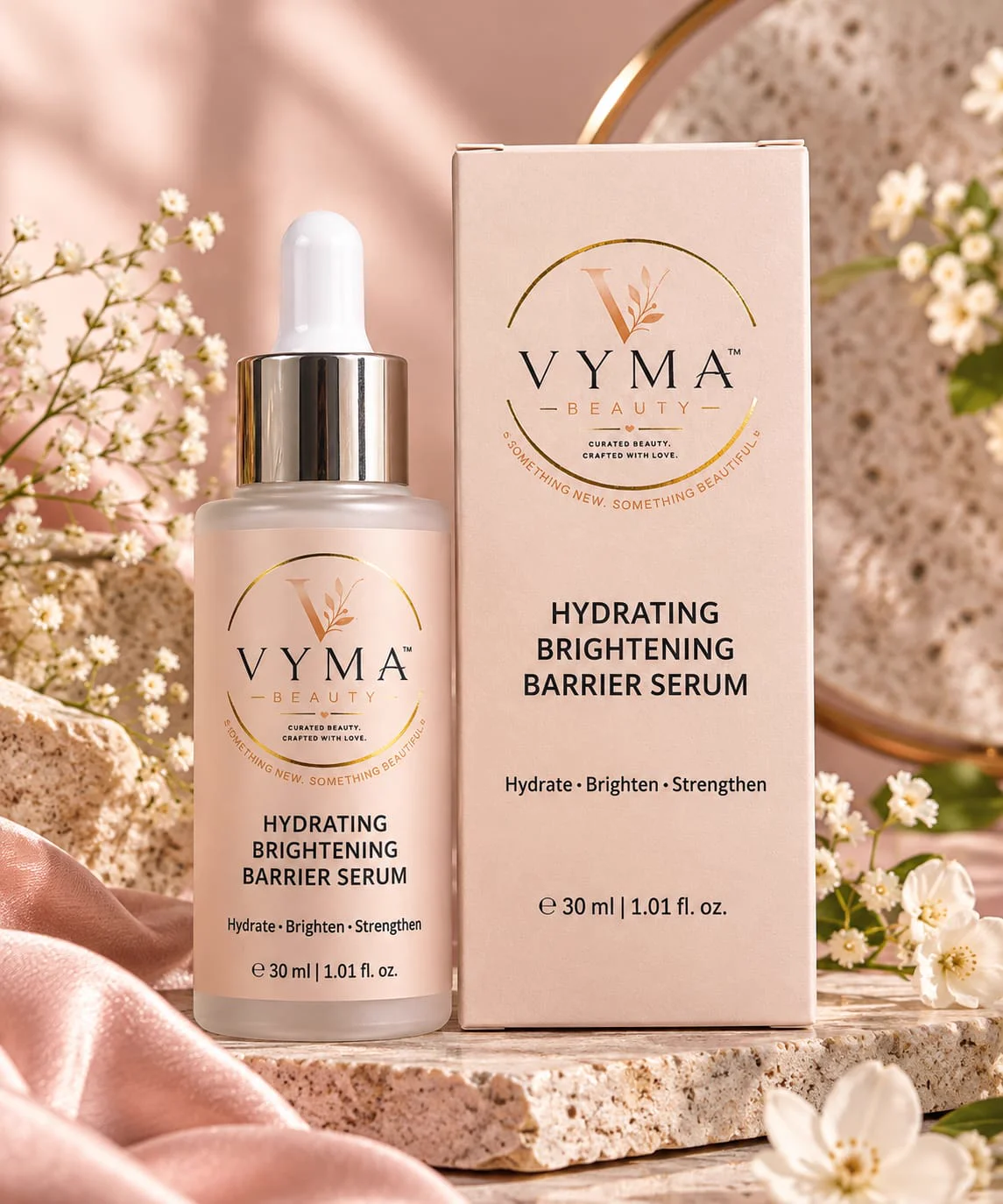
At VYMA Beauty, we believe skincare should combine thoughtful formulation with a simple, enjoyable experience. Instead of forcing you to layer three different serums, our Brightening Serum brings together niacinamide 5% and a curated selection of hydrating and skin-conditioning ingredients in a single dewy bottle:
Final Thoughts: Choose Ingredients With Intention
Skincare becomes easier when you understand what each ingredient is designed to do.
Niacinamide can help with the appearance of uneven skin tone and support the skin barrier. Hyaluronic acid helps attract moisture, while panthenol supports hydration and skin comfort.
Rather than chasing every new trend, start with your skin's needs and choose products that fit your routine.
Because the best skincare routine is not necessarily the one with the most steps. It is the one you understand, enjoy, and can follow consistently.
Curated Beauty. Crafted With Love.